In our previous discussion, we explored the “Screen Shield”—how leaders often hide a lack of strategic depth behind polished slide decks. We argued that true leadership is Analog Influence: the ability to command a room through the sheer weight of one’s voice and judgment.
But what happens when that voice is no longer heard? What happens when a leader has the “Inner Spine” to give hard feedback and the “Intellectual Authority” to design the future, but finds themselves in a system that only rewards the quarterly spike?
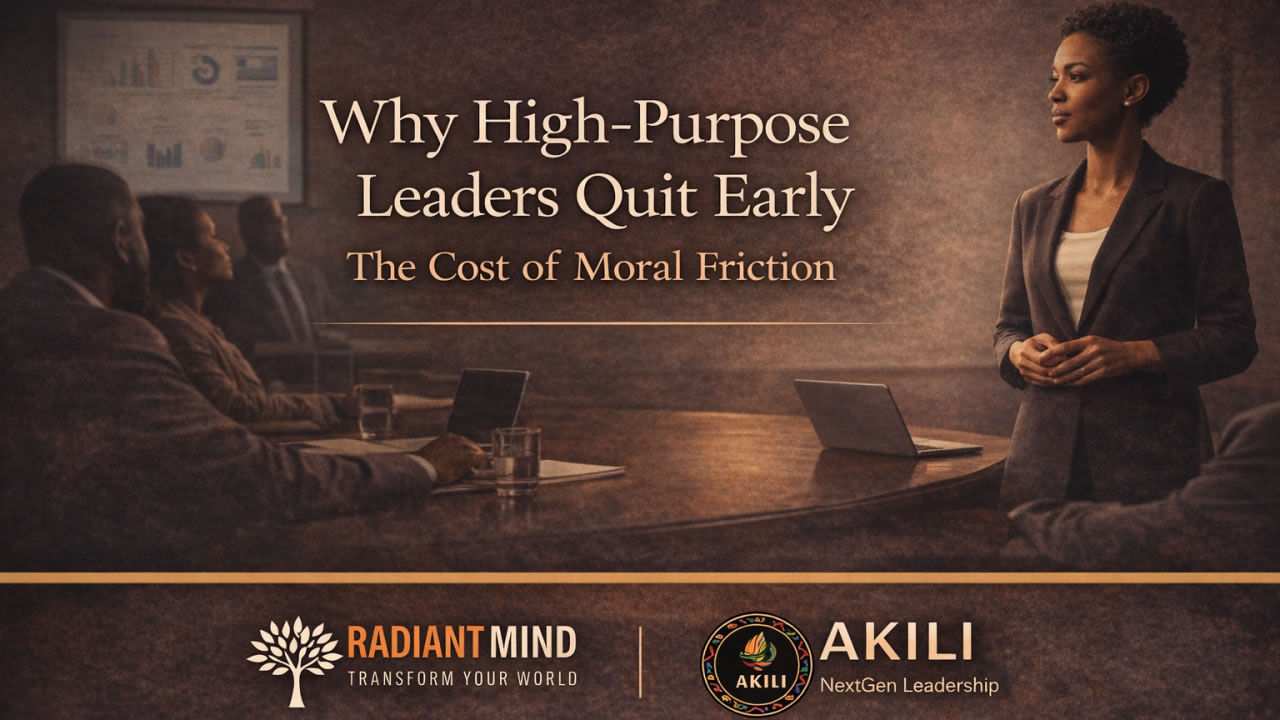
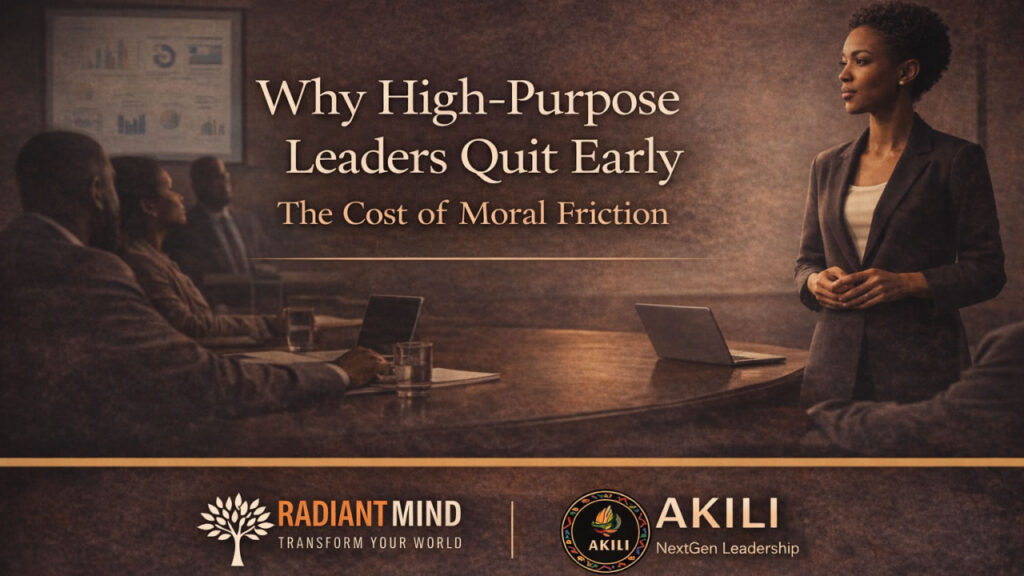
We are seeing a quiet paradox at the summit of modern leadership: The leaders with the strongest sense of purpose are often the first to leave. As we continue our series on The Gen Z Leadership Paradox, we must confront the “Purpose Gap”—where the cost of staying becomes a conflict with who the leader is.
1. The Burden of the “Unwritten” Job Description
High-purpose leaders don’t just manage performance; they architect culture. They carry a backpack filled with things that aren’t in their contract: the team’s emotional health, the ethical weight of every “minor” compromise, and the long-term legacy of the brand.
While a traditional manager asks, “Is it legal?”, a high-purpose leader asks, “Is it right?” Over time, the effort of holding these “Analog” values in a purely digital, data-driven system leads to a specific kind of soul-fatigue.
2. The Gen Z “Squeeze”
We are currently in a massive generational transition. Gen Z isn’t looking for a boss; they are looking for a Moral Compass. They demand radical transparency and authentic action. They want to know if the values on the lobby wall match the behavior in the boardroom.
High-purpose leaders usually agree with these demands. However, they often find themselves trapped—forced to be the “buffer” between a rigid, legacy system and a new generation that sees right through it. Being the bridge between “what is” and “what should be” is the most exhausting job in the world.
3. The Isolation of Integrity
In entry-level roles, there is room for “venting.” But as leadership stakes rise, the margin for vulnerability shrinks. High-purpose leaders often find themselves on a “lonely island.”
- The Performance of Certainty: Teams look to leaders for stability. If a leader admits they are struggling with the ethical weight of a corporate directive, it is often misinterpreted as weakness.
- The Echo Chamber: Subordinates often tell leaders what they want to hear. This creates a vacuum where honest reflection is replaced by transactional feedback.
4. Systems Reward Results, Not “Why”
Most organizations talk about “Mission,” but they promote based on “Margin.” When a leader prioritizes human impact or long-term sustainability over a quarterly spike, they face friction.
At Radiant Mind Africa, we see this as a failure of Intentional Formation. Organizations are built to measure the “What” (quantifiable results), but they rarely have the metrics for the “Why” (integrity and human impact). When the “Why” is consistently sacrificed for the “Margin,” high-integrity leaders reach a threshold where staying requires them to betray their own soul.
The Real Question for the Boardroom
When a high-purpose leader resigns, the post-mortem shouldn’t ask, “Why couldn’t they handle the pressure?” The better question is: “What is it about our system that forces our most committed people to choose between their job and their soul?”
When these leaders leave, you don’t just lose a head-count. You lose:
- Moral Clarity: The person who told the truth.
- Cultural Stability: The person the team actually trusted.
- Long-term Viability: The person who was looking past the next ten days.
Final Reflection
High-purpose leaders rarely quit because they stop caring. They leave because they care too much to watch the “Resonance” of the organization fade into noise.
In the long arc of a career, choosing your integrity over your title isn’t a failure—it’s the ultimate act of leadership.
Let’s keep the conversation going: How do you navigate the tension between “Mission” and “Margin” in your current role? Is your organization architected to keep its most purposeful people, or is it forcing them out?
Share your thoughts below. Let’s move #BeyondTheShift.
About the Author Roselynn Wekikye (Leen) is a Leadership Development Specialist and a Core Team Member of the Radiant Mind Africa – AKILI (Africa’s Key Innovative Leadership Incubator) NextGen Leadership Program. She is dedicated to equipping the next generation of leaders with the resilience and strategic depth required to lead with purpose in a volatile world.