In our previous discussion, we exposed the “Annual Review Trap”—the dangerous reality that by the time you analyze a yearly survey, the leadership crisis it identifies has already expired. We argued for Continuous Listening as the only way to manage the modern workforce.
But listening is only the first half of the equation. The second half is Integration. If the “Rear-View Mirror” model is failing, how do executives stay connected to the real-time frequency of a world that pivots in an afternoon? The answer lies in flipping the script on authority.
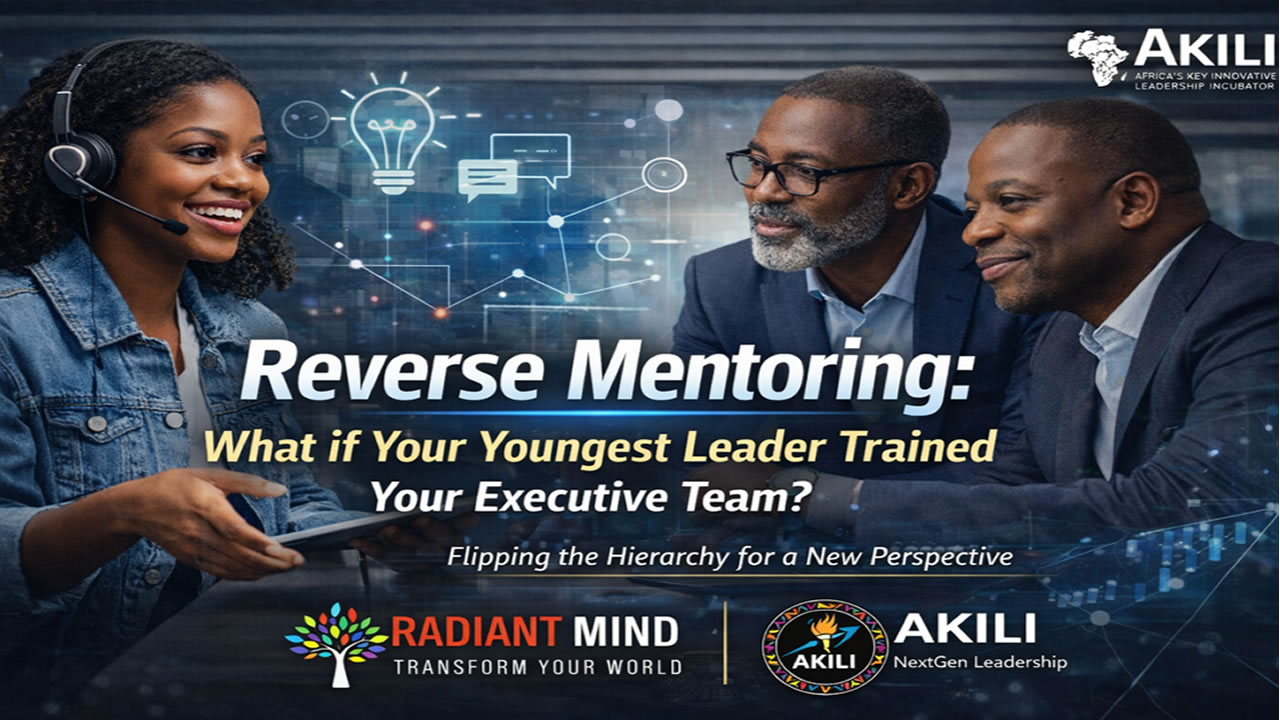
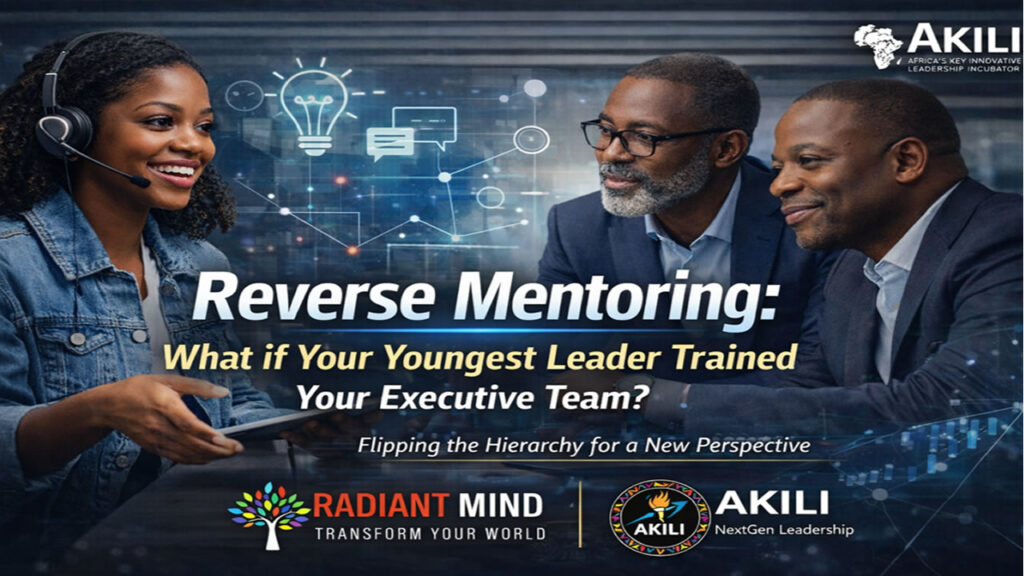
As we continue our series on The Gen Z Leadership Paradox, we must ask a provocative question: What if your youngest leader was responsible for training your executive team?
The Seismic Shift in Workplace Power
We are currently navigating a profound transition in workplace demographics. With Generation Z already comprising roughly 30% of new hires—and projected to reach over 25% of the total workforce by 2025—the “top-down” information flow is becoming a bottleneck.
This isn’t just about age; it’s about Intellectual Authority. Gen Z brings a level of digital fluency and social pulse that traditional hierarchies struggle to match. To stay competitive, senior leaders must move beyond the “Screen Shield” and embrace Reverse Mentoring.
What is Reverse Mentoring?
Reverse mentoring flips the traditional hierarchy. It is a strategic practice where younger or less experienced employees mentor senior executives. At Radiant Mind Africa, we see this as a vital component of Leadership Transformation.
This approach serves four critical strategic purposes:
- Bridging the Generational Resonance: It helps senior leaders move past “historical sentiment” to understand the real-time values and communication styles of the NextGen.
- Enhancing Digital Fluency: Younger employees possess the “Analog Influence” in digital spaces, helping leaders navigate emerging technologies and social trends.
- Driving “Bottom-Up” Innovation: Fresh perspectives challenge outdated assumptions and spark ideas that haven’t been filtered through years of corporate “standard practice.”
- Promoting Inclusive Accountability: It creates a culture where power is replaced by Psychological Safety, allowing for honest dialogue across age groups.
Bridging the Tension: From Friction to Flow
When we compare the “Establishment” and “NextGen” leadership styles, several areas of tension emerge:
- Communication: Formal, hierarchical channels vs. Gen Z’s preference for immediacy and transparency.
- Purpose: Stability and loyalty vs. Social responsibility and flexibility.
- Feedback: Annual autopsies vs. Continuous Feedback Loops.
Recognizing these tensions is the first step. The second is implementing Progressive Leadership strategies to bridge them.
Strategies for the Modern Executive
To bridge the gap, leaders must adopt the following:
- Embrace Reverse Mentoring: Don’t just “talk” to your juniors; let them teach you. Democratize the flow of knowledge.
- Cultivate Inclusive Communication: Tailor your style to the “Refresh” generation. Use digital tools for real-time updates.
- Align on Shared Purpose: Find the “Common Why” that resonates across generations—focusing on social impact and personal development.
- Invest in Cross-Generational Training: Move toward empathy, adaptability, and digital literacy.
Conclusion
Imagine a future where the youngest leaders do not just influence but actively shape leadership paradigms. This challenges us to rethink traditional hierarchies and embrace a more dynamic approach.
The question for every Boardroom today is: Are you willing to be a student of the generation you are trying to lead?
Let’s keep the conversation going: Should organizations empower their youngest employees to lead and train senior executives? Why or why not? Share your thoughts below.
Let’s move #BeyondTheShift.
About the Author Coach Denis Nuwagaba is a Career Transition Strategist and Transformation Leadership Coach. He is a Core Team Member of the Radiant Mind Africa – AKILI (Africa’s Key Innovative Leadership Incubator) NextGen Leadership Program, dedicated to bridging the performance gaps in the next generation of global leaders.